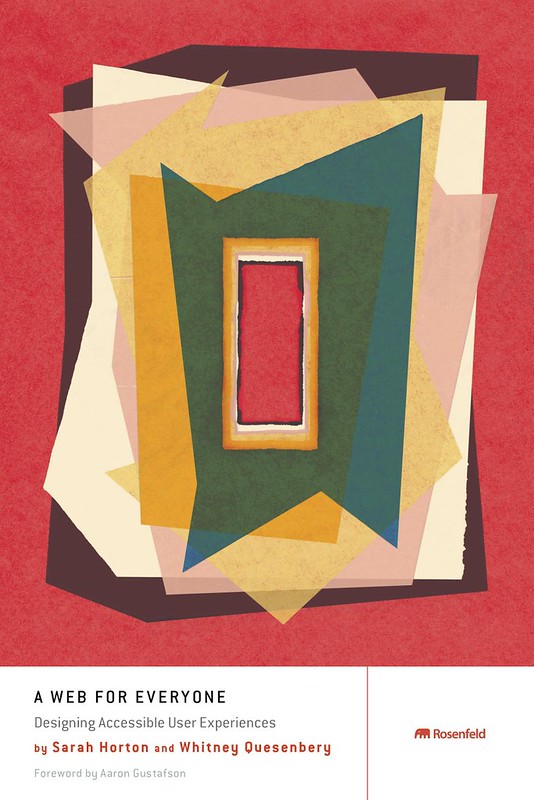
A Web for Everyone

Designing Accessible User Experiences
If you are in charge of the user experience, development, or strategy for a web site, A Web for Everyone will help you make your site accessible without sacrificing design or innovation. Rooted in universal design principles, this book provides solutions: practical advice and examples of how to create sites that everyone can use.
If you are in charge of the user experience, development, or strategy for a web site, A Web for Everyone will help you make your site accessible without sacrificing design or innovation. Rooted in universal design principles, this book provides solutions: practical advice and examples of how to create sites that everyone can use.
Testimonials
I know both authors, and it would be hard to say which of them knows more about accessibility. What I do know is that together they know more than any other two people about what’s important about accessibility, which makes them exactly the kind of people—and this exactly the kind of book—that I like to learn from.
If you’re in any way responsible for making things accessible, do yourself a favor and read it. By the time you’re done, you’ll understand that accessibility isn’t something you tack on to a good design—it is good design.
Steve Krug, Author of Don’t Make Me Think: A Common Sense Approach to Web Usability
In plain language, there is one word for this book—terrific! If you have experienced the road to web accessibility as a labyrinthian and mystifying journey, this book will illuminate and smooth the way. Whitney and Sarah use concepts familiar to most web professionals and apply them to accessibility in a practical context that will improve user experience for all. Bravo!
Sharron Rush, author, teacher, Executive Director of Knowbility
By bridging the gap between accessibility and UX, this book has the potential to help accessibility grow into the mainstream: accessibility for everyone, on every device, in every imaginable context.
Denis Boudreau, Web Accessibility Avenger, Deque Systems, Inc.
I’ve been waiting for this book—the book that changes the discussion from “How do I meet accessibility requirements,” to thinking of accessibility as a driver for innovation and excellent user experience design. Thank you, Sarah and Whitney, for finally bringing it to life!
Dana Chisnell, co-author of Handbook of Usability Testing
If you want to be part of building the accessible web, this really is the book that brings it all together. Full of actionable insights that are clearly and persuasively presented, it’s quite simply essential reading.
Gerry Gaffney, Director and UX Consultant, Information & Design
Mobile is proving once again what accessibility advocates knew all along—designing for universal access is a smart business decision. The same accessibility principles that make your website work for everyone will also help your website work well with all devices, screen sizes, and input mechanisms.
Accessibility isn’t just about providing a great experience for the disabled—it’s what will enable you to connect with all your users, regardless of which device they use to go online.
Karen McGrane, author of Content Strategy for Mobile
This book is like a “Hitchhiker’s Guide to the Galaxy of Accessibility” for technical communicators, usability practitioners, and many more. There is something here for everyone—from the novice to the experienced practitioner—who wants to make a web for everyone.
Karen Mardahl, STC AccessAbility SIG manager and Technical Writer, SimCorp.com
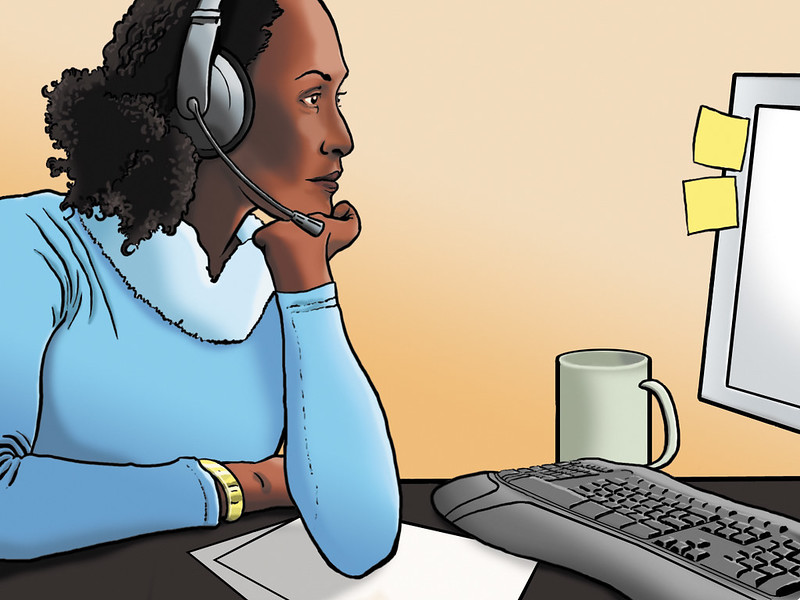
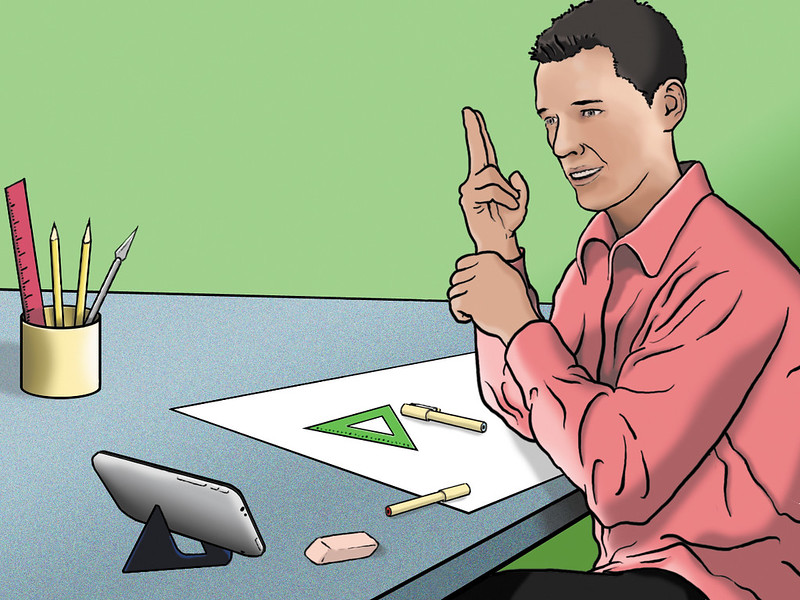
A Web for Everyone is a book for everyone who creates or manages websites. In fact, all UX designers and managers, web or not, will find value in this impeccably structured, beautifully written resource. User personas communicate concretely about the diversity of human abilities and tie the material together. The key chapters end with first-person visits with the people who shaped the ideas, like Ginny Redish and Ben Shneiderman. Wonderful!
Clayton Lewis, Fellow, Institute of Cognitive Science, University of Colorado
This comprehensive playbook provides a user-centered view of how not only to design for those with diverse needs, but also to ultimately reach everyone more effectively.
By just applying even a fraction of the design principles in this book, you could not only widen your audience to new members, but also deepen the engagement of your existing user base.
Designing to be inclusive is a true win-win: our products can be used by more of the world, and the world can use our products more easily.
Christian Rohrer, Chief Design Officer, McAfee
Sarah and Whitney present accessibility so that everyone can understand the core concepts of web accessibility, even if they have limited programming experience. Every web developer who is just starting to get involved with web accessibility should purchase this book!
Jonathan Lazar, Harvard University, Towson University
Table of Contents
Foreword by Aaron Gustafson
Chapter 1: A Web for Everyone
Chapter 2: People First: Designing for differences
Chapter 3: Clear Purpose: Well-defined goals
Chapter 4: Solid Structure: Built to standards
Chapter 5: Easy Interaction: Everything works
Chapter 6: Helpful Wayfinding: Guides users
Chapter 7: Clean Presentation: Visual design supports meaning
Chapter 8: Plain Language: Creates a conversation
Chapter 9: Accessible Media: Supports all senses
Chapter 10: Universal Usability: Creates delight
Chapter 11: An Integrated Process
Chapter 12: The Future: Design for all
Appendix: WCAG 2.0 Cross Check
FAQ
These common questions about web accessibility and their short answers are taken from Sarah Horton and Whitney Quesenbery’s book A Web for Everyone: Designing Accessible User Experiences. You can find longer answers to each in your copy of the book, either printed or digital version.
- I’m not a designer (or I’m not a developer), so why should I read this book?
It’s difficult to imagine a context in which one person could take a product, from soup to nuts, and make it accessible. There are so many decisions to be made, and accessibility must be considered at every step along the way. A designer or developer can’t make accessibility happen alone.If the decisions you make as part of your work impact someone’s experi- ence of a digital product, you need to know how to make decisions that will not result in accessibility issues. If you are leading an organization or a team, you may need to shake things up and change ow you do business in order to achieve accessibility. You can’t just tack it on and hope it sticks You need everyone to change their processes to make accessibility part of their practice.Chapter 11 looks at putting accessibility into practice.
Resources
Accessible UX principles and guidelines
Using the accessible UX principles and guidelines, you can create websites and web applications that work for everyone—including people with disabilities. Each of the guidelines is explained and illustrated in A Web for Everyone.
Read the AUX principles and guidelines
- On the web
- Appendix A (PDF)
We have also created a table that maps the AUX guidelines to the Web Content Accessibility Guidelines (WCAG) 2.0, in Appendix B.